

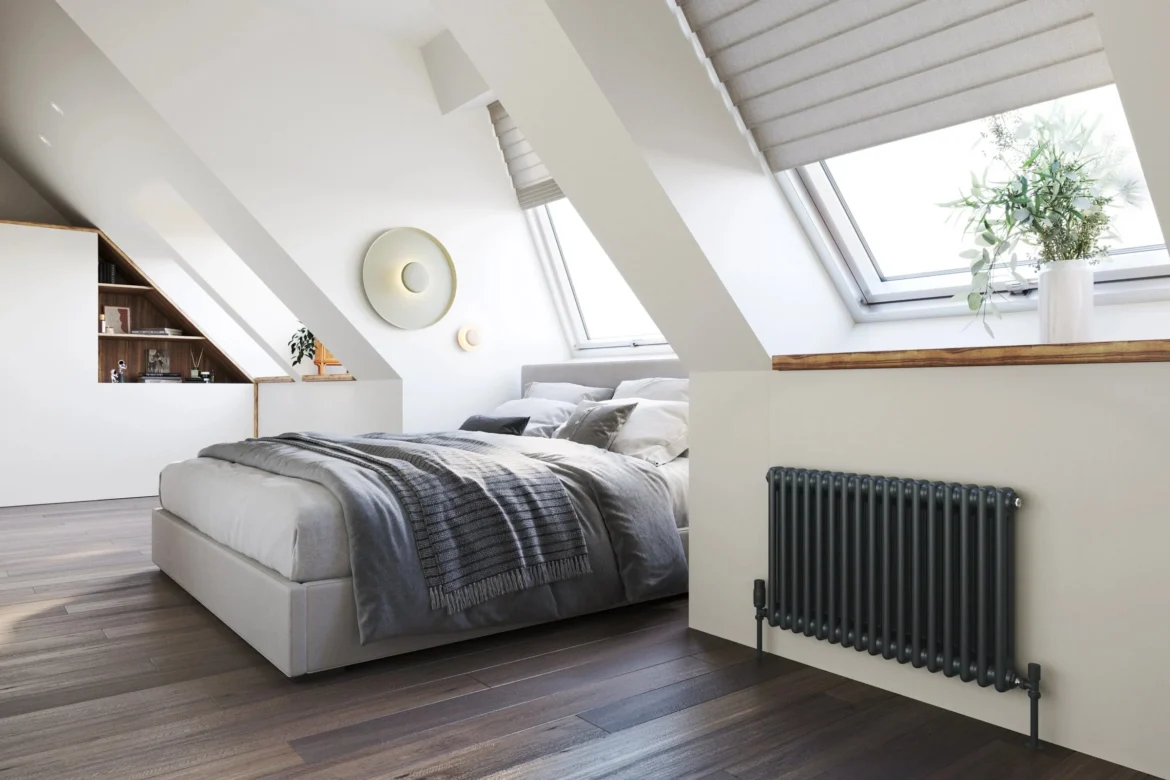
Choosing the right radiator for a high-ceilinged room requires careful attention to heat output, room volume, insulation, positioning, and heating-system compatibility. Tall spaces allow warm air to rise, so an undersized or poorly placed radiator may leave the occupied area uncomfortable, particularly during colder months and periods of frequent use.
Introduction
High ceilings can make a room feel spacious, elegant, and full of character. However, they can also make heating more difficult because warm air naturally rises towards the ceiling. This often leaves the upper area warm while the occupied part of the room remains cooler. Choosing radiators for rooms with high ceilings based only on appearance or width may therefore lead to poor performance. To create consistent warmth, you need to consider the room’s full volume, insulation, heat loss, available wall space, and heating system. A carefully selected radiator can improve comfort, support efficient heating, and complement the room’s overall design.
Calculate the Full Size of the Room
The first step is to calculate the complete volume of the room rather than focusing only on floor area. Two rooms may have the same length and width, but the one with the higher ceiling contains more air. As a result, it usually needs a radiator with a greater heat output. Measure the room’s length, width, and ceiling height. These measurements can be used in a reliable heat-loss or BTU calculator. The result will give you an estimate of how much heat the room needs to reach a comfortable temperature. For rooms with very high ceilings, open-plan layouts, large windows, or unusual shapes, a basic online calculation may not provide the full picture. In these situations, it is sensible to ask a qualified heating professional to assess the space before choosing a radiator.
Consider the Room’s Heat Loss
Room size is important, but it is not the only factor that affects heating demand. The condition of the building can make a significant difference. A well-insulated room with modern glazing will retain heat more effectively than a room with older windows, draughts, and uninsulated walls.
External walls can increase heat loss, especially when the room is exposed to cold winds. Large windows may also allow warmth to escape more quickly. Roof construction is particularly important in rooms with high ceilings because a large amount of heat may be lost through the upper part of the building.
Flooring should also be considered. Solid floors, suspended timber floors, and floors above unheated spaces can all affect how warm the room feels. Reviewing these details will help you choose a radiator with an output that matches the room’s actual heating needs.
Choose the Correct Heat Output
Radiator output is normally measured in British Thermal Units or watts. These figures show how much heat a radiator can provide under specific operating conditions. The selected radiator should meet or slightly exceed the calculated heat requirement for the room. It is important not to assume that a physically large radiator will always provide the best output. The number of panels, convector fins, columns, and tubes can all influence performance. A deeper double-panel radiator may provide more heat than a wider single-panel model.
Always check the manufacturer’s stated output before buying. You should also confirm the temperature at which the output was measured. This matters because radiators provide less heat when they are connected to systems that operate at lower water temperatures.
Consider Double-Panel and Triple-Panel Radiators
Double-panel radiators are often suitable for rooms that need a higher heat output but have limited horizontal wall space. They contain additional panels and convector fins, giving them a larger surface area from which to release heat. Triple-panel radiators can provide even greater output. They may be useful in large rooms with significant heat loss, but they are also deeper than standard models. Before choosing one, check that it will not interfere with furniture, doors, curtains, or walking areas.
The aim is to find a radiator that provides enough heat without making the room feel crowded. A high-output radiator should fit comfortably within the layout and allow air to circulate around it.
Use Vertical Radiators Where Space Is Limited
Vertical radiators can be a practical solution when wide wall space is unavailable. They can fit between windows, beside doors, or on narrow sections of wall that would not suit a traditional horizontal radiator. Their tall shape can also work well with the proportions of a high-ceilinged room. A carefully selected vertical radiator can become an attractive design feature while still providing useful heat. However, height alone does not guarantee strong performance. Some narrow vertical models may have a lower output than expected. Always compare the output rating with the room’s calculated requirement. In some cases, a deeper vertical model or an additional radiator may be needed.
Plan the Radiator Position Carefully
Radiator position affects how evenly heat spreads throughout the room. Traditional placement beneath a window can still work well because the radiator warms cooler air entering from the glazing. However, this position is only effective when the radiator has the correct output and is not blocked. Avoid placing large furniture directly in front of the radiator. Sofas, cabinets, and tables can prevent heat from moving freely into the room. Curtains should not hang over the radiator because they may trap heat between the fabric and the window. Decorative radiator covers can also reduce performance when they do not provide enough ventilation. The radiator should have clear space around its front, top, and sides, following the manufacturer’s installation guidance.
Decide Whether One Radiator Is Enough
A single large radiator may not always provide the most even heating. In a wide, long, or irregular room, two smaller radiators can sometimes distribute warmth more effectively. Placing radiators in different parts of the room may reduce cold areas and help maintain a more consistent temperature. This can be particularly helpful where there are several external walls, large glazed sections, or open entrances to adjoining spaces.
When selecting radiators for rooms with high ceilings, consider both total output and heat distribution. The combined output of multiple radiators should meet the calculated requirement, and the heating system should be balanced so each unit receives an appropriate flow of hot water.
Check Compatibility With the Heating System
The type of heating system will influence the radiator size required. Traditional boilers often operate at higher flow temperatures, while modern condensing boilers and heat pumps may work at lower temperatures. A radiator produces less heat when the water flowing through it is cooler. Therefore, a system operating at a lower temperature may need a radiator with a larger surface area. This could mean choosing a wider model, a deeper panel radiator, or more than one radiator.
Check the manufacturer’s performance information for different operating temperatures. This will help ensure that the radiator delivers enough heat under the actual conditions of your heating system.
Improve Insulation Before Increasing Radiator Size
Installing a larger radiator is not always the best answer when a room feels cold. Poor insulation, gaps around doors, and ageing windows may allow heat to escape almost as quickly as the radiator produces it. Improving roof or loft insulation can be especially valuable in rooms with high ceilings. Because warm air rises, reducing heat loss through the upper structure can make the room feel noticeably more comfortable.
Sealing draughts around windows and doors can also help maintain a stable temperature. These improvements may reduce the output required from the radiator and lower the amount of energy needed to heat the room.
Use Heating Controls Effectively
Thermostatic radiator valves allow you to control the temperature of individual rooms. They can help prevent overheating and reduce energy use when a room does not need to remain warm throughout the day. Programmable and smart heating controls can provide further flexibility. They allow heating schedules to follow normal occupancy patterns, ensuring that the room is warm when needed without running the system continuously. Controls must be placed and used correctly. A thermostatic valve should not be hidden behind furniture or curtains because trapped heat may cause it to reduce the radiator output before the wider room reaches the desired temperature.
Maintain the Radiator and Heating System
Even a correctly sized radiator may perform poorly when the heating system is not maintained. Trapped air can prevent the upper part of a radiator from warming properly, while sludge or restricted water flow can reduce overall output. Radiators should be checked and bled when necessary. The system may also need balancing so that hot water is distributed evenly between different radiators in the property.
Keeping the radiator clean is equally important. Dust can collect between panels and convector fins, reducing airflow. Regular cleaning helps the radiator transfer heat more effectively into the room.
Conclusion
Choosing the right radiator for a room with high ceilings starts with an accurate understanding of the space. Measure the full room volume, assess insulation and glazing, and calculate the required heat output before comparing radiator styles. Vertical radiators can make good use of narrow walls, while double-panel and triple-panel models can provide stronger output where space is limited. Positioning is also important because furniture, curtains, and covers can restrict airflow and reduce performance. In larger or irregular rooms, more than one radiator may create more balanced warmth. You should also check compatibility with the boiler or heat pump, particularly when the system operates at a lower water temperature. With suitable insulation, effective heating controls, and regular maintenance, radiators for rooms with high ceilings can provide reliable warmth, better comfort, and efficient performance without compromising the room’s layout or visual appeal.