
A home dojo often begins with spare space in a garage, rumpus room or converted bedroom. The temptation is to buy equipment first and solve the room later. A safer approach reverses that order. The household should examine the space, decide what training will occur and then choose the surface and layout.
Start with the floor. It should be level, dry and free from loose boards, cracked tiles or sharp fixings. Concrete can be cold and unforgiving, while carpet may allow a training surface to move or buckle. The base does not have to be perfect, but its condition must be understood before martial art mats are installed.
Next, define the activities. Solo forms, stretching and light footwork have different demands from grappling, takedowns or repeated breakfalls. Children may move unpredictably, and adults create greater force because of their body mass. The surface must therefore suit the highest-impact activity that will realistically take place, not the easiest drill on the schedule.
Clearance matters around every edge. A mat area squeezed between a workbench and a brick wall leaves little room for error. Furniture, shelves, heaters, tools and glass should be removed or placed well outside the movement zone. Low ceilings, hanging lights and garage door tracks also need attention when training includes jumps, weapons practice or lifted techniques.
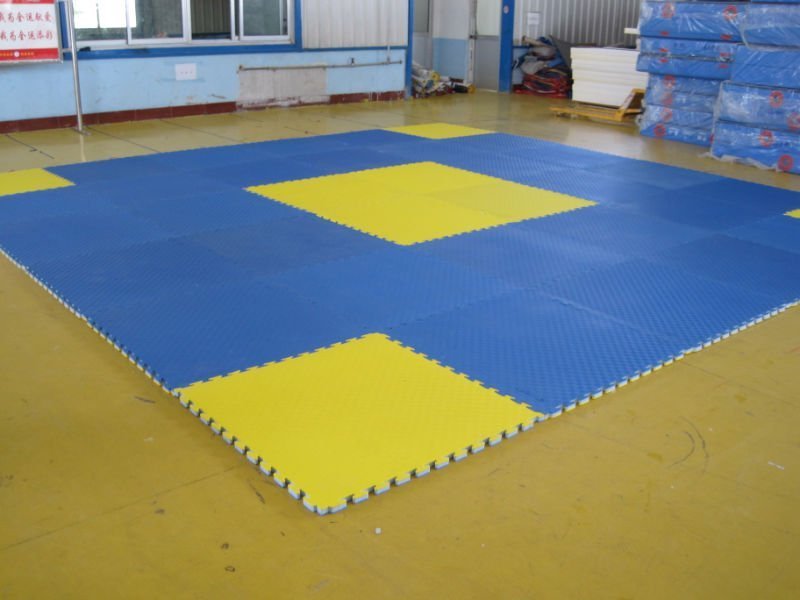
The mats should form one flat field. Joins must close securely, and edge pieces should not curl upwards. A small lip can catch a foot during a turn or become a trip point when a child runs onto the area. The household should inspect the layout before each session, particularly if the surface is packed away between uses.
Mixed-age training needs clear rules. Children should not practise throws or submissions without suitable instruction and direct adult supervision. Adults should match speed and resistance to the smaller partner rather than treating the session as ordinary sparring. A home setting can feel relaxed, but the same control expected in a formal class still applies.
Hygiene is part of safety. Bare feet, hands and close contact transfer sweat and dirt to the floor. Martial art mats should be cleaned with products and methods suitable for their material, then allowed to dry. Outdoor shoes, food and pets should stay off the training area where practical.
A simple equipment boundary helps keep the room organised. Pads, gloves and training weapons can be stored in a separate rack so they do not become obstacles. Damaged gear should be removed promptly. Children also need to understand that the dojo is not a general play space when equipment has been left out.
Lighting and ventilation affect concentration. Bright, even light helps participants judge distance and notice hazards. Fresh air makes longer sessions more comfortable, especially in a garage during warm Australian weather. Fans should be positioned so that blades, cords and stands remain outside the training zone.
Emergency planning can remain simple. Keep a phone accessible, know the address that would be given to emergency services and maintain a basic first aid kit. Training should stop when someone feels unwell, dizzy or unusually sore.
Noise should be considered in shared homes. Repeated footwork and falls can travel through walls and floors, even when participants feel comfortable. Training hours, room position and the type of base beneath the surface may reduce disruption. Family members should agree when higher-impact practice can occur. This practical discussion about martial art mats protects relationships and may prevent the household from choosing a room that looks convenient but performs poorly once regular sessions begin.
A visible set of house rules can help younger users remember expectations. It may cover supervision, footwear, permitted drills, cleaning and where equipment belongs after practice.
A safer home dojo comes from many small choices working together. Suitable martial art mats provide the foundation, but space, supervision, cleanliness and sensible session design complete the system. When the room supports controlled practice, both children and adults can focus on learning rather than avoiding preventable hazards.