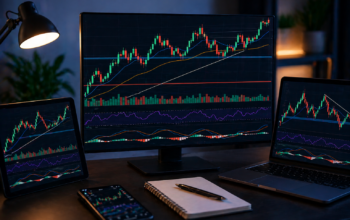


Ask a trader to describe their process and they’ll usually describe the analytical part how they identify setups, what criteria they use, how they determine entry levels and stop placement. What gets less attention is everything that happens between completing the analysis and actually executing the trade: the moment of hesitation before clicking, the last-second reassessment of whether the setup is really valid, the adjustment to position size that doesn’t quite match the formula, the entry taken a few ticks away from the planned level because price moved slightly during the final check.
These moments between chart and execution are where the gap between a trader’s intended process and their actual process lives. And forex trading platforms the environment in which all of this happens shape that gap in ways that are underappreciated until the wrong platform has made a difficult situation worse.
The Chart-to-Order Transition
The transition from completing an analysis to placing an order seems mechanical but contains several decision points where things can go wrong. The position size needs to be correctly calculated and entered. The stop level needs to be placed at the technically defined point rather than adjusted to make the potential loss feel more comfortable. The entry method market order, limit order, stop order needs to match what the setup actually requires rather than defaulting to whatever is easiest.
On well-designed forex trading platforms, this transition is streamlined enough that it doesn’t create significant friction. The order entry interface is accessible directly from the chart. Position sizing tools calculate lot size from risk parameters rather than requiring manual calculation. One-click or hotkey-based execution reduces the steps between decision and action to a minimum.
How Platform Design Influences Decision Quality
The relationship between forex trading platforms and decision quality runs deeper than execution mechanics. The way information is presented, the visual hierarchy of the interface, the speed at which the platform responds to market data all of these shape the cognitive environment in which trading decisions get made.
A platform that presents information clearly where the data most relevant to the current decision is prominent and the contextual data is accessible without being obtrusive supports better decision-making by reducing the filtering work the trader’s brain has to do. A platform where the relevant information is buried in menus, requires switching between screens to assemble, or is presented without clear visual hierarchy forces the trader to work harder to get the same picture work that consumes cognitive resources that should be available for the actual analytical judgment.
Testing Platforms Under Real Conditions
The only reliable way to understand how a platform performs in the chart-to-execution transition is to use it during live market sessions not just during the demo period when conditions are calm and there’s no urgency, but during genuinely active sessions when data releases are landing, spreads are moving, and the transition from analysis to execution needs to happen quickly.
These experiential qualities of forex trading platforms aren’t captured in feature comparisons or specification sheets. They reveal themselves through use under the conditions that matter which is why the demo period, used deliberately to simulate real trading conditions rather than just to learn basic navigation, is a genuine evaluation tool rather than just an introductory courtesy.
The Execution Record as a Diagnostic Tool
One use of platform data that gets less attention than it deserves is the execution record as a diagnostic for where the chart-to-trade transition is breaking down. A trade journal that records not just entry and exit prices but intended versus actual entry levels, intended versus actual position sizes, and the time elapsed between analytical completion and order placement creates a data set that reveals where the transition is clean and where it has consistent failure points.
The gap between chart and execution isn’t just a mechanical interval. It’s where the quality of the analytical work either gets faithfully translated into a trade or gets compromised by the friction of the execution environment. Managing that gap deliberately through platform choice, through workflow design, through honest diagnostic review of the execution record is part of what professional forex trading platforms usage actually looks like at a serious level.